Pediatric presentation
Vomiting in children
A symptom of the whole child: obstruction in the newborn, intussusception in the infant, the head and the ketones in the older child.
What are you worried about?
- Bilious vomiting: malrotation with volvulus at any age, obstruction
- Intussusception in the infant and toddler
- Pyloric stenosis in the 3 to 8 week old
- Diabetic ketoacidosis
- Raised intracranial pressure
- Dehydration and hypochloremic alkalosis
Differential, by age
Newborn birth to 28 days
- Malrotation with volvulus
- Pyloric stenosis (from about 3 weeks)
- Necrotizing enterocolitis in the preterm
- Sepsis
- Inborn errors of metabolism
- Gastro-esophageal reflux (effortless, thriving)
Infant 1 to 12 months
- Gastroenteritis
- Intussusception
- Urinary tract infection
- Cow's milk protein allergy
- Raised intracranial pressure
Toddler 1 to 3 years
- Gastroenteritis
- Intussusception
- Ingestion
- Otitis media or pneumonia
- Appendicitis (atypical, often perforated at diagnosis)
Preschool 3 to 5 years
- Gastroenteritis
- Appendicitis
- Diabetic ketoacidosis
- Streptococcal pharyngitis
- Brain tumour
School age 6 to 11 years
- Gastroenteritis
- Appendicitis
- Diabetic ketoacidosis
- Migraine
- Cyclic vomiting
Adolescent 12 to 17 years
- Gastroenteritis
- Diabetic ketoacidosis
- Pregnancy
- Ingestion
- Eating disorder
- Pancreatitis
Key history
- Colour: green (bilious) changes everything; blood; coffee grounds
- Timing relative to feeds and to pain; projectile; early morning
- The stool: diarrhea, blood, red-currant jelly, none at all
- Intake and output: feeds taken, wet diapers, last urine
- Polyuria, polydipsia, weight loss, breathing pattern (ketoacidosis)
- Headache, gait, vision, behaviour (pressure); trauma; possible ingestion; menstrual and sexual history in adolescents
Key examination
- Hydration and perfusion first
- The abdomen: distension, tenderness, a mass (the olive, the sausage), bowel sounds; the hernial orifices and the testes
- Fontanelle, head circumference, fundi, gait and coordination
- Ketotic breath, Kussmaul breathing
- Weight, and the weight trend
Red flags
- Bilious or bloody vomiting
- A distended or tender abdomen, or an infant who screams then goes floppy
- Signs of dehydration with reduced urine output, or lethargy
- Early morning vomiting, headache, ataxia, a new squint
- Kussmaul breathing, a fruity breath, polyuria
- Vomiting in a young infant with poor weight gain
Initial investigations
- Bedside glucose in any significant vomiting; ketones if raised
- Electrolytes and a gas in persistent vomiting (hypochloremic hypokalemic alkalosis in pyloric stenosis)
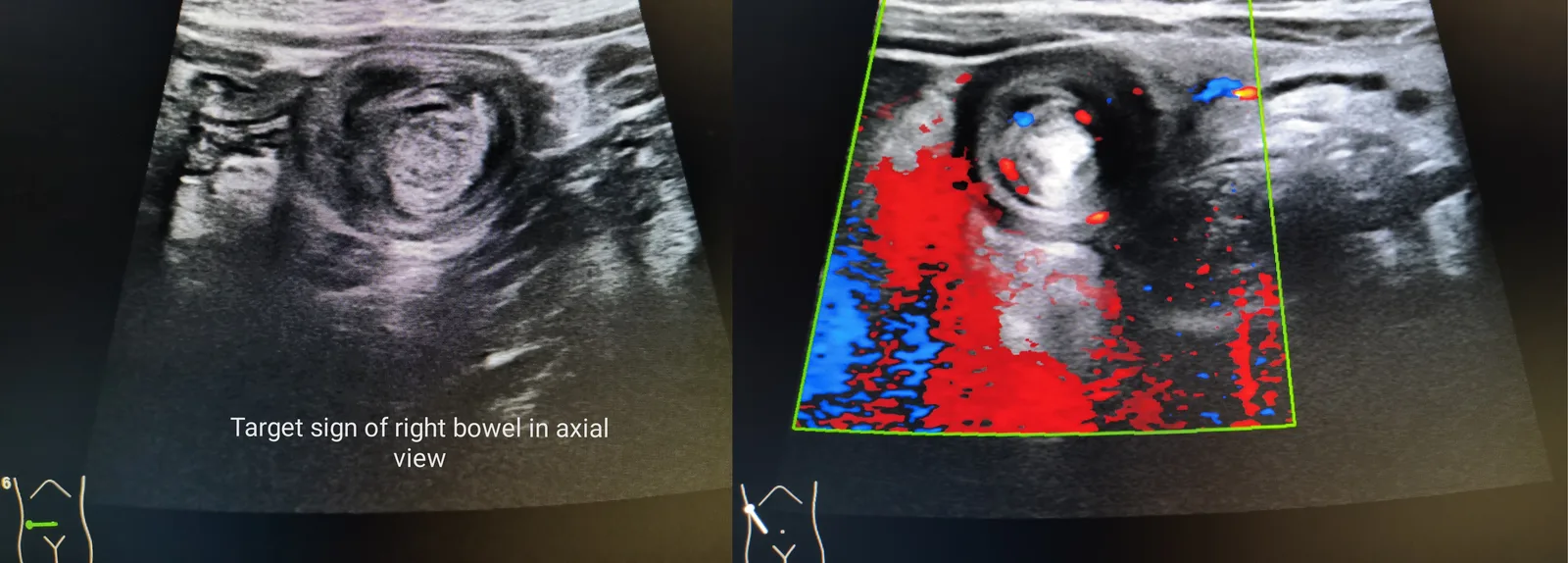
- Abdominal ultrasound for suspected intussusception or pyloric stenosis
- Upper gastrointestinal contrast study, urgently, for bilious vomiting
- Neuroimaging for the pressure pattern; a pregnancy test in adolescents
How to interpret them
- A chloride below the reference range with a high bicarbonate in a hungry vomiting infant is pyloric stenosis physiology
- Ultrasound is operator-dependent: a negative scan with a strong story is repeated, not believed
- Ketones with a high glucose is ketoacidosis; ketones with a low or normal glucose is starvation or a metabolic disease
When the child is deteriorating
- Shock from dehydration: bolus, reassess, repeat; correct sodium slowly
- A surgical abdomen: nil by mouth, nasogastric tube, fluids, surgeons at the bedside
- Ketoacidosis: fluids by protocol, potassium before insulin, watch the mental status for cerebral edema
Cases and practice
Vomiting and diarrhea, and only two wet diapers18 months old · An 18-month-old has had two days of vomiting and watery stools. Her father counts diapers, and today's count is two.Thirsty for weeks, vomiting since this morning12 years old · A 12-year-old has been drinking litres, wetting the bed again, and losing weight. Today he cannot keep water down and is breathing strangely.
See it
Conditions under this presentation
The adult frame, for contrast