Pediatric presentation
Abdominal pain in children
Young children localize poorly; the age tells you where to look, and the examination is done by watching the face.
What are you worried about?
- Appendicitis, especially the perforated appendicitis of the young child
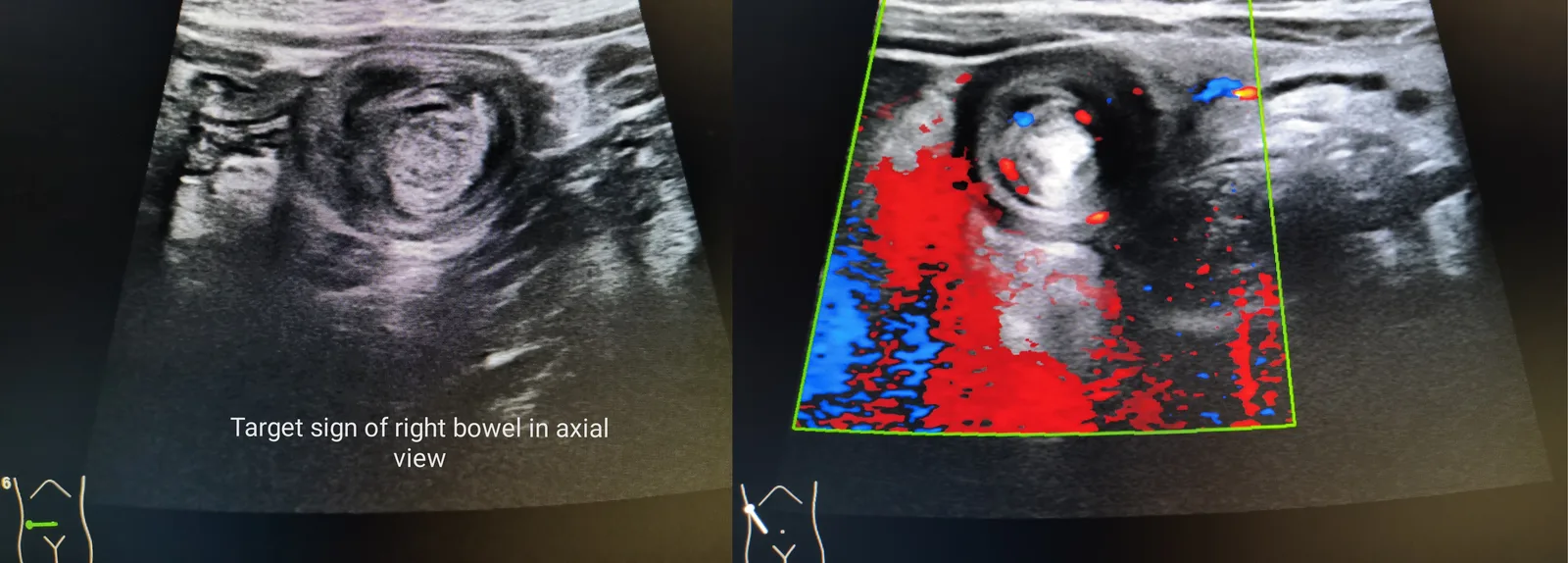
- Intussusception and malrotation in the infant and toddler
- Incarcerated hernia and testicular torsion
- Diabetic ketoacidosis presenting as an acute abdomen
- Ovarian torsion and ectopic pregnancy in the adolescent
Differential, by age
Infant 1 to 12 months
- Colic
- Intussusception
- Incarcerated hernia
- Volvulus
- Urinary tract infection
Toddler 1 to 3 years
- Intussusception
- Gastroenteritis
- Constipation
- Urinary tract infection
- Lower lobe pneumonia
Preschool 3 to 5 years
- Constipation
- Gastroenteritis
- Appendicitis
- Mesenteric adenitis
- Streptococcal pharyngitis
- Diabetic ketoacidosis
School age 6 to 11 years
- Appendicitis
- Constipation
- Mesenteric adenitis
- IgA vasculitis
- Functional abdominal pain
Adolescent 12 to 17 years
- Appendicitis
- Ovarian torsion or cyst
- Pelvic inflammatory disease
- Ectopic pregnancy
- Testicular torsion
- Inflammatory bowel disease
- Pancreatitis
Key history
- Onset, migration, character, and what makes it worse (movement points to peritonism)
- Vomiting and its relation to the pain; bowel habit, the last stool
- Urinary symptoms; fever; sore throat; cough
- Menstrual history, possibility of pregnancy, sexual history in the adolescent, privately
- Recent purpuric rash or joint pain (IgA vasculitis); weight loss or nocturnal symptoms (inflammatory bowel disease)
Key examination
- Observation: lying still (peritonism) versus writhing (colic)
- Ask the child to hop, cough, or jump: peritoneal irritation shows in the face
- Gentle examination starting away from the pain; guarding and rebound in the right lower quadrant
- The groin, the scrotum and the testes, every time
- The chest, the throat, the skin, the joints
Red flags
- Bilious vomiting, a distended abdomen, absent bowel sounds
- Pain with movement, guarding, rigidity
- A tender or swollen testis or groin
- Signs of shock or dehydration
- Blood in the stool, a purpuric rash, weight loss
Initial investigations
- Urinalysis in every child; a pregnancy test in every adolescent who could be pregnant
- Blood glucose and ketones if any suggestion of diabetes
- Ultrasound as the first imaging test for appendicitis, intussusception, ovarian and testicular pathology
- Blood count and C-reactive protein, read with the examination, not instead of it
- Abdominal X-ray only for suspected obstruction or a foreign body
How to interpret them
- A normal white count does not exclude appendicitis; a raised one does not diagnose it
- A non-visualized appendix on ultrasound is not a normal appendix
- Pain, then vomiting, then fever, in that order, is the appendicitis sequence
When the child is deteriorating
- Peritonitis or obstruction: nil by mouth, fluids, analgesia (analgesia does not hide the diagnosis), surgeons
- Testicular torsion: surgical exploration within hours, no imaging delay
- Ketoacidosis is treated as ketoacidosis; the abdominal pain resolves with the acidosis
Cases and practice
Thirsty for weeks, vomiting since this morning12 years old · A 12-year-old has been drinking litres, wetting the bed again, and losing weight. Today he cannot keep water down and is breathing strangely.Vomiting and diarrhea, and only two wet diapers18 months old · An 18-month-old has had two days of vomiting and watery stools. Her father counts diapers, and today's count is two.
See it
Conditions under this presentation
The adult frame, for contrast